Method 1: Tuning your Guitar Using The GuitarTuna App on your Mobile Phone
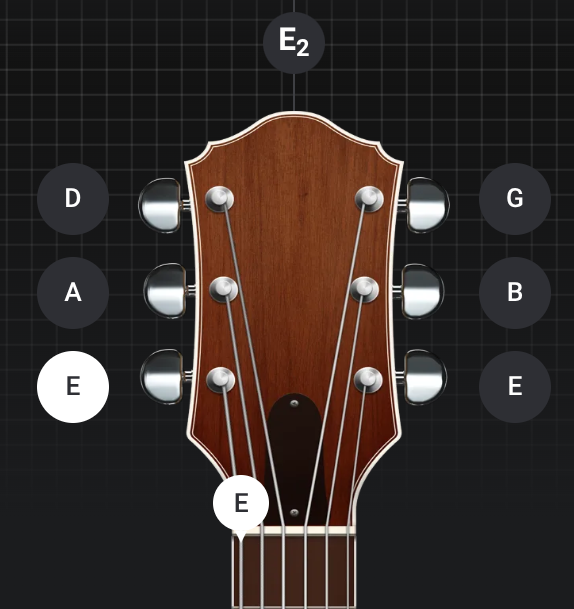
These days, the most common way for beginners to tune your guitar is by using the GuitarTuna App on your Mobile Phone. It’s for free and it replaces the electronic tuner that you can buy in any guitar Shop.

To tune your guitar with GuitarTuna, first download and open the app on your phone.
How to actually start tuning your guitar strings with the app?
We will tune to standard tuning, which is EADGBE.
Select the string on the app, for example the low E string first.
Pluck the low E string and watch the indicator on the screen. If the note is too low, tighten the tuning peg; if it is too high, loosen it until the indicator is centered.
Repeat this process for the A, D, G, B, and high E strings, tuning each one individually.
GuitarTuna provides visual feedback to help you reach the correct pitch accurately.
Once all six strings are in tune, your guitar is ready to play.
Method 2: Tuning your Guitar with an Electronic Tuner
Even today the old fashioned electronic tuner is commonly used, also by professional guitarists. Today the clip on tuner is common (see image). This tuner has the advantage of picking up string vibrations instead of using a microphone. This works really well in gig environments or in the rehearsal rooms when your bandmates might be making all kinds of notes around you.

How to actually start tuning your guitar strings with a tuner?
We will tune to standard tuning, which is EADGBE.
Select the string on tuner if you have to.
Pluck the low E string and watch the indicator on the screen. If the note is too low, tighten the tuning peg; if it is too high, loosen it until the indicator is centered.
Repeat this process for the A, D, G, B, and high E strings, tuning each one individually.
Once all six strings are in tune, your guitar is ready to play.
Method 3: Tuning by ear using Open Strings
Learning how to tune a guitar by ear is a valuable skill for every guitarist. While electronic tuners make tuning quick and easy, understanding the relationship between the strings will help you become a more confident musician. This method uses one correctly tuned string as a reference and then tunes the remaining strings relative to it.
Step 1: Tune the Low E String as a reference string
We will tune to standard tuning, which is EADGBE.
The first step is to tune the low E string, which is the thickest string on the guitar. This string serves as the reference point for tuning all the other strings.
To tune the low E string accurately, use a reliable reference pitch. You can compare it with the low E string of another properly tuned guitar, play an E note on a piano, or use a digital tuner. Beginners are encouraged to use a tuner for this step, as it provides the most accurate starting point.
If you do not have access to a reference pitch, simply tune the low E string to what sounds reasonable. As long as all the other strings are tuned relative to it, the guitar will still sound in tune with itself. The overall pitch may be slightly higher or lower than standard tuning, but this is usually not a problem when playing alone or accompanying a singer.
Step 2: Tune the other 5 strings (ADGBE)
Once the low E string is correctly tuned, you can use it to tune the rest of the guitar.
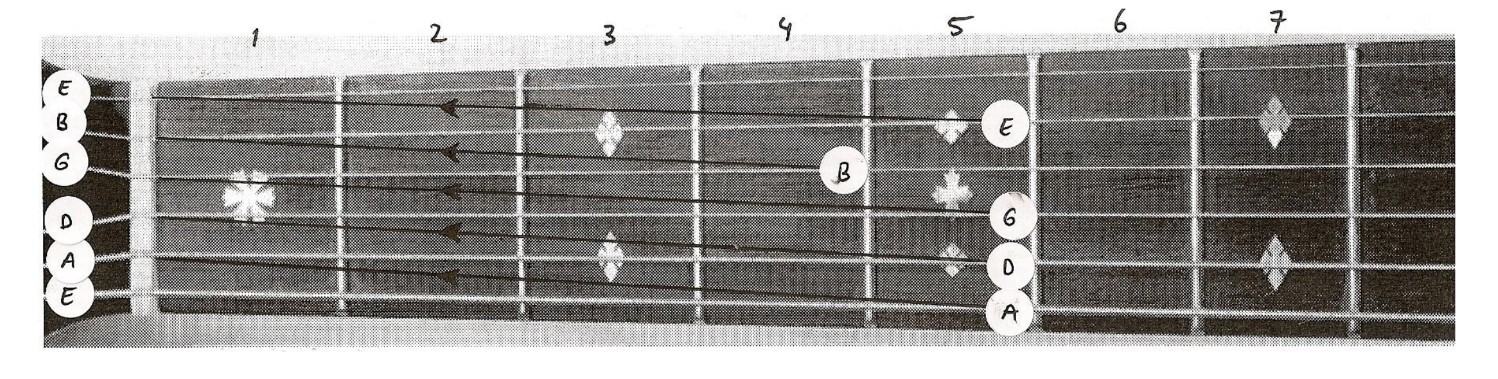
The basic principle is simple: press the already tuned string at a specific fret and match the pitch of the adjacent open string to that note.
Quick Reference Guide
Low E string, 5th fret → Open A string
A string, 5th fret → Open D string
D string, 5th fret → Open G string
G string, 4th fret → Open B string
B string, 5th fret → Open High E string
Method 4: Tuning by ear using Harmonics
This is also a widely used tuning method. Somehow, it becomes easier to hear small imperfections when overtones start blending together.
What are Harmonics?
When you pluck a string, you are actually hearing several layers of sound at the same time. The fundamental tone is the most important one; it is the loudest and allows us to recognize the pitch. At the same time, however, you also hear overtones. If you are not paying close attention, you will probably not consciously notice them. These overtones can even be played without the fundamental tone, and this principle can be used for tuning the guitar.
Why use this tuning method?
Harmonics create a cleaner and more precise sound than the basic tuning method, and they make it easier to detect small inaccuracies due to the subtle wave patterns in the sound. This method is used by some guitarists to check and refine their tuning.
How do you play a harmonic?
Your right hand works as usual by plucking the string. The technique lies in the left hand. First, you should only lightly touch the string without pressing it down onto the fret. Second, your finger must be positioned directly above the fret wire. This requires some practice, but it is well worth the effort. Harmonics are also widely used in modern guitar music.

Step 1: Tune the Low E String
As with other tuning methods, it is essential to start by tuning the low E string correctly. This can be done using a piano, another properly tuned guitar, or an electronic tuner. For more detailed instructions, refer to Step 1 of the first tuning method.
These steps are very similar and can therefore be explained together. As before, the low E string is used as the reference point. The string order is: E–A–D–G–B–E (from thick to thin).
To tune the A, D, G, and high E strings, follow this rule:
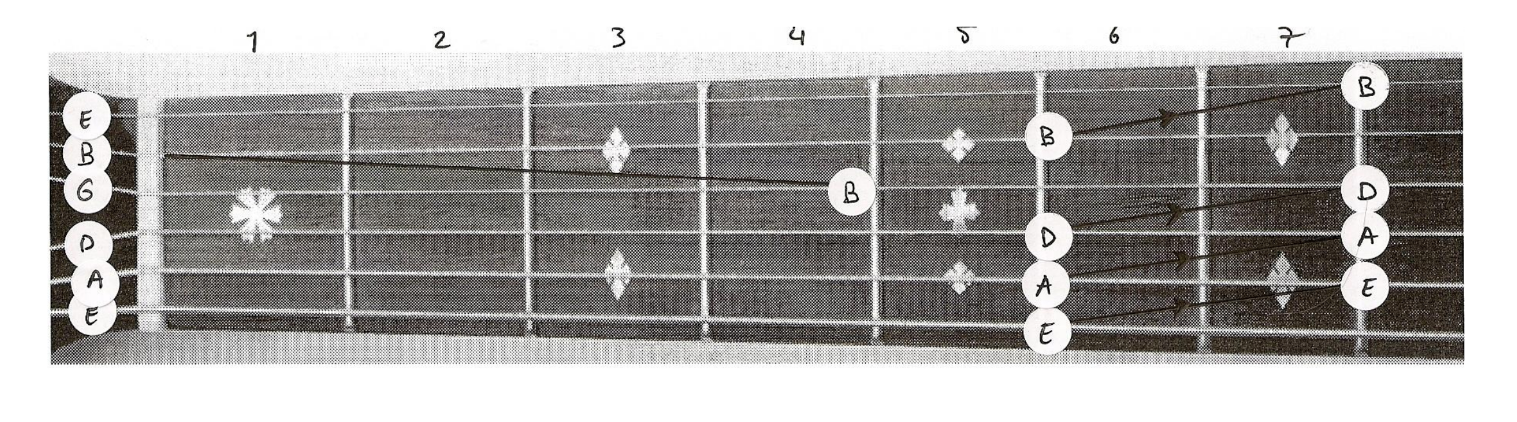
Place your index finger lightly on the 5th fret of the already tuned string and play the harmonic.
Let it ring out. While the first harmonic is still sounding, place your ring finger lightly on the 7th fret of the string you want to tune and play its harmonic.
When both tones are played together, you will hear a wavering or pulsating sound if they are not in tune. Adjust the tuning peg of the second string until this wave disappears.
Remember: the slower the pulsation, the closer you are to perfect tuning.
Exception: tuning the B string
For the B string, there is an exception to the rule.
You can use the standard method described in Method 3.
Press the string down at the 4th fret and match it to the next open string.
Summary
There are 4 effective methods to tune your Guitar:
Method 1: Using The GuitarTuna App on your Mobile Phone
Method 2: Tuning with an electronic tuner
Method 3: Tuning by ear using Open Strings
Method 4: Tuning by ear using Harmonics
Conclusion:
When in doubt, just use a tuner and focus on your guitar playing first. Along the way you will master this skill without a doubt!
Thanks for paying attention.
I hope this info helped you to learn how to tune your guitar.